Table Of Content
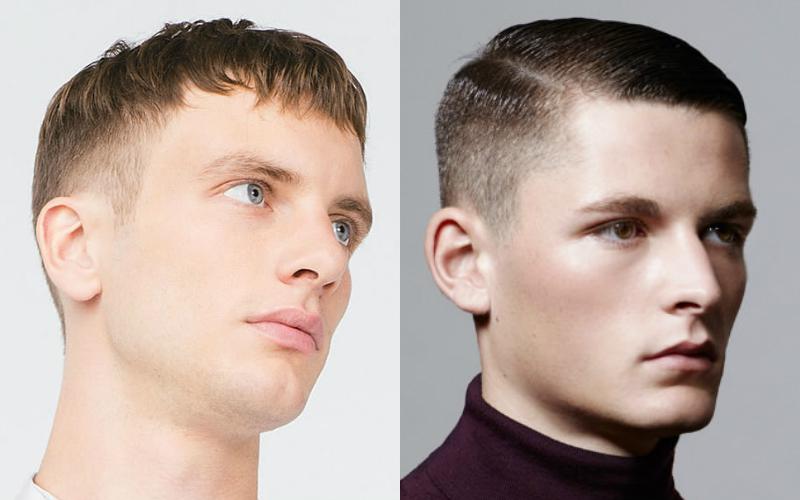
Army facial hair rules include sideburns so long as they do not extend below the bottom of the opening of the ear. The U.S. Army has removed potentially offensive language such as “faddish or exaggerated styles” of hair to embrace diversity. The Army determined that women attending Ranger, Special Forces, or Sapper training desired short hair while training in austere training environments. However, males are permitted to tint, bleach, or highlight their hair as long as it results in a natural appearance. Male soldiers are not permitted to wear cornrows, braids, twists, and locks in uniform or when on duty.
Army Piercing Policy
Sideburns, on the other hand, are allowed with certain specifications. The only exception is when granted a medical or religious waiver by the U.S. Alternate versions like handlebar mustaches, goatees, or beards are simply not allowed. For starters, the Army released a graphic that demonstrates the policy with specific details.

Facial hair
Andrews also feels pride that the catalyst for some of the change came from the National Guard. As an Army National Guard officer who has deployed all over the world, Capt. Jawana McFadden always felt the Army’s strict rules toward women’s hair needlessly compromised not only who she was as a person, but how she performed as a soldier. A soldier’s medical exemption to the Army’s beard policy must specify the maximum length of the beard. Soldiers can not use medical exemptions to grow shaped beard styles like goatees and handlebar mustaches. Highlights also can’t be unnatural colors, such as purple, blue, green, pink, bright red, fluorescent or neon.
Ponytails and lipstick: Sweeping changes to Army grooming standards are coming - ArmyTimes.com
Ponytails and lipstick: Sweeping changes to Army grooming standards are coming.
Posted: Tue, 26 Jan 2021 08:00:00 GMT [source]
Religious Accommodations
Examples of prohibited hairstyles under this definition would include Mohawks, Horseshoes, or “Landing Strips” (see below). Male hairstyles may cut a part into the hairstyle in circumstances where the texture of the hair does not part naturally. The United States Army has a list of standards and expectations for all members regarding their uniform as well as physical appearance. “Allowing this modification will alleviate some strain to the scalp caused by mandatory bun for medium and long hair,” the slides say.
Army High and Tight
The undercut is a less common Army haircut; it adheres to regulations involving a longer top section of hair, with the sides and back cut very short or shaven. So now you might be wondering what hairstyles are acceptable and what are not. Members may not “attach, affix, or display objects, articles, jewelry or ornamentation to or through the ear, nose, tongue, or any exposed body part) according to official Army personal appearance standards. The facial hair must also not extend above a parallel line at the lowest portion of the nose. Army is not allowed, aside from mustaches and under the guidelines beards as part of religious practice in AR 670-1. “Loose, graduated hairstyles” as well as “layered hairstyles” are permitted with extra clarifications.
Army Makeup Regulations
Nicole Kirschmann, a career Army civilian, said on her personal Twitter account that she believed the service should allow women to wear ponytails and take into consideration different textures and types of hair. Having “grooming standards that show sensitivity to the cultural and ethnic diversity already present in our Army would go a long way in ‘walking the talk’ about diversity and inclusion,” she told Task & Purpose. As for hair and grooming standards, a series of recommended grooming standard changes were brought to Army leadership last month after being voted on by a review panel comprised of representatives throughout the Army. According to slides made public on Tuesday, the voting members of the panel included 15 women (10 Black women, 4 white women, and one Hispanic woman) and two men (one Black man and one Hispanic man). Four male subject matter experts — two dermatologists, one psychologist, and one equal opportunity advisor — were also present on the panel, though they did not vote.
Army Eyeglasses, Sunglasses and Contact Lenses Regulations

Retirees can wear only APFUs combined with civilian clothes outside of Army installations. AR does not apply to chiefs of staff, who can decide their own uniforms. I’m in high school, have a high school degree, or am enrolled in college. Become a leader and serve your country in one of the nation's top leadership training programs. You can do this while maintaining your college curriculum and earning up to 100% tuition coverage.
The Military Regulated My Hair for Years. Their New Rules Don’t Go Far Enough. - Ms. Magazine
The Military Regulated My Hair for Years. Their New Rules Don’t Go Far Enough..
Posted: Mon, 22 Mar 2021 07:00:00 GMT [source]
There are a variety of options available to help you pursue education with flexibility, such as ROTC programs, the GI Bill, and other programs that help pay for college tuition, trade school, technical school, or trainings. Army ROTC has several scholarships available for college-bound high school students. Review your options at ROTC Scholarships, or immediately apply by creating an account at my.goarmy.com to get started. To become an Army Officer, you must be at least 18 years old and have a college degree obtained either through ROTC, U.S. Military Academy at West Point, or from another college or university program.
Army Male Hair Regulations
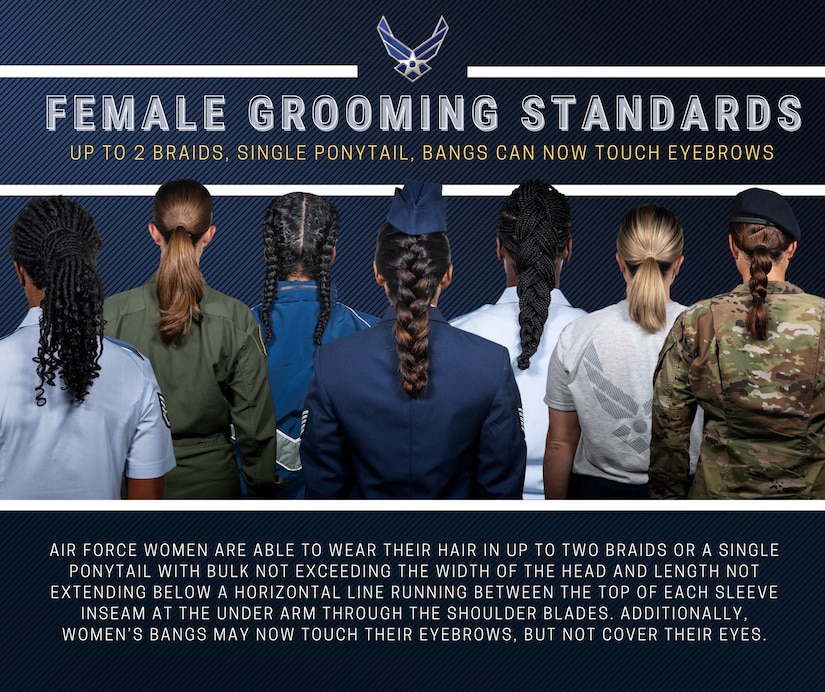
As always, no hairstyles may interfere with the use of headgear, a major requirement for all branches of the U.S. Ponytails are also authorized for female soldiers with medium or long hair, but they must be gathered at the back and pinned to remain above the bottom of the color. By eliminating some of the restrictions, Soldiers will now have more flexibility, all while keeping it within the confines of professionalism, Mitchell said. Further, having a choice to wear multiple hairstyles will allow female Soldiers more ways to secure their hair so that it can fit appropriately under their headgear.
In addition, the Army is also revising its grooming standards to support its People First priority and diversity and inclusion efforts. The push to change the Army's grooming standards proves that the force is evolving and making a concerted effort to make everyone feel included, said Master Sgt. Quintana Mitchell, the uniform policy NCO for G-1. The most significant changes are new regulations increasing the variety of acceptable hairstyles for female soldiers. The revisions also removes potentially offensive language used to describe several hairstyles and replaces with appropriate terminology for unauthorized grooming and appearance standards.
They can not wear earrings on other parts of the ear while in uniform or on duty. According to Paragraph 3-2 of AR 670-1, mustaches can not extend past the corners of the mouth (imagine a vertical line drawn upward from the corners of the mouth). You can serve part-time or full-time as you train in our health care program. Upon graduation of the program, you will enter the Army health care team as a Commissioned Officer.



No comments:
Post a Comment