Table Of Content
- Queen Alia International Airport / Foster + Partners
- Grimshaw Wins Competition to Transform Shenzhen Airport Terminal into Green Hub
- Dezeen Agenda features Foster + Partners' plans for Saudi Arabia airport powered by renewable energy
- Forecasting Airport Traffic
- Airport business solutions for the aviation industry
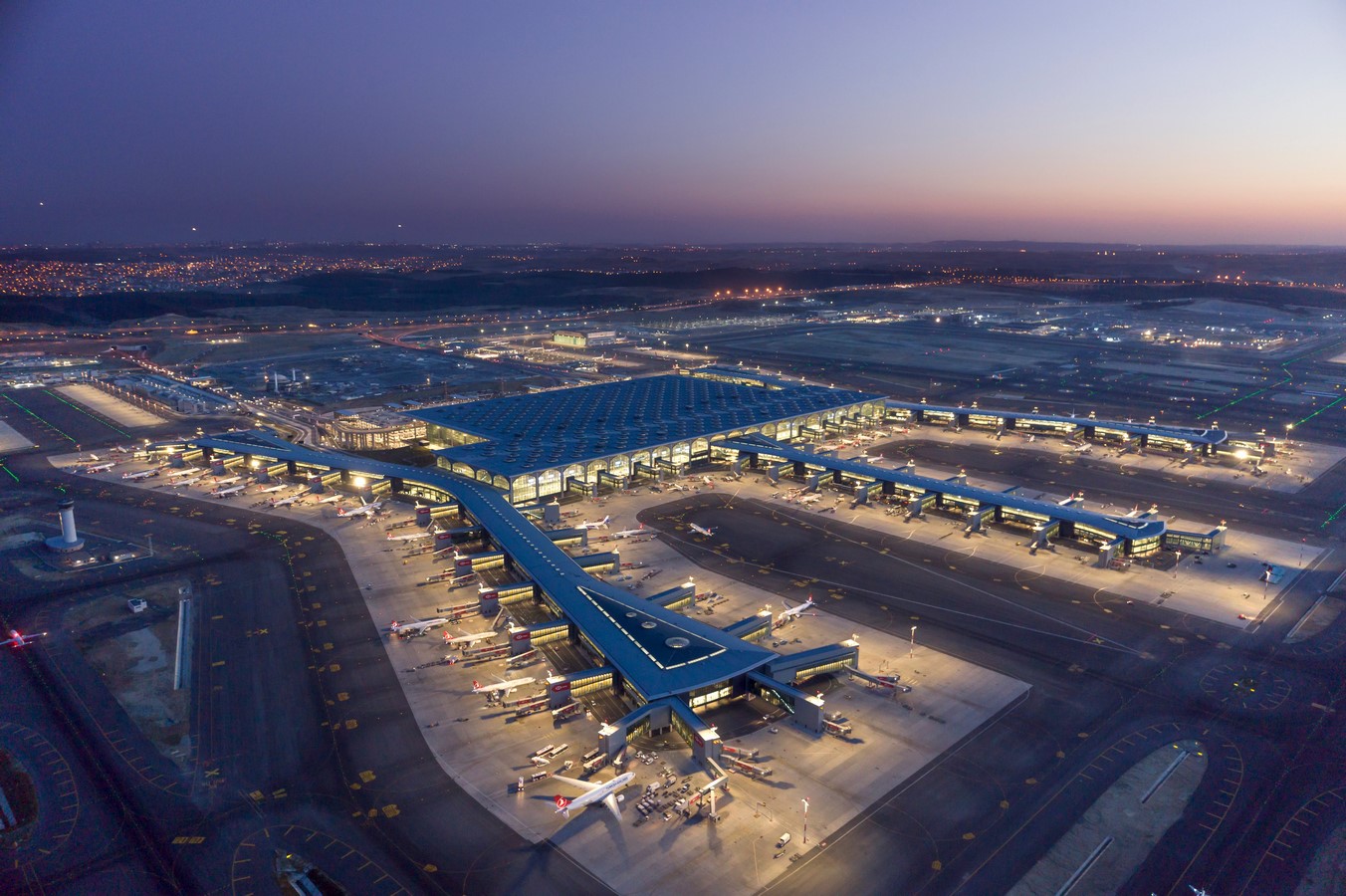
The renovation reopens the project’s soaring vaults to restore the project’s core idea of a gallery-like waiting areas with open views in and out to a sculpture court. Built to organize flow for both Schengen and non-Schengen passengers, the terminal expansion focuses on simplicity and a rational design. It was built with a straightforward steel frame, a continuous glass façade, and prefabricated concrete slabs. As the team explained, the materials and colors were inspired by nature and Iceland’s incredible environments. The expansive facade also means that travelers can see Iceland’s changing weather and vast landscapes from the airport itself. Designed as a gateway project for Venice and a landmark terminal, this renovation and expansion project was also complete alongside the Marco Polo airport masterplan by One Works.
Queen Alia International Airport / Foster + Partners

A shining light in this seemingly dark time for aviation is the revamped LaGuardia Airport, New York City’s once-reviled domestic hub that has undergone an $8 billion overhaul and become the talk of the town for the right reasons instead. That’s especially true in Terminal B, which has received a state-of-the-art revamp by HOK and WSP Design. Terminal 4.5 Core offers direct connectivity to Terminal 5’s baggage claim and check-in lobby. Furthermore, it serves as a centralised hub between Terminals 4 and 5, granting passengers access to all four levels of the terminal building on the pre-security side via elevators, escalators, and stairs. The project, the terminal’s first major renovation since its 1984 construction, added approximately 45,000ft² of space and a $140m in-line baggage security screening facility.
Grimshaw Wins Competition to Transform Shenzhen Airport Terminal into Green Hub
Sensors limit the amount of direct sunlight during the day, and at night artificial light reflects off of the louvers to provide uniform illumination. The underside of each dome is embossed like the surface of a leaf, and browns and creams match the color scheme of the surrounding desert. Each dome provided a modular unit for construction and will allow the airport to easily expand in the future. Inside, golden metal panels reference the gilded spires of St. Petersburg churches, and lighting fixtures run along the folds of the panels. Voids between the panels reveal skylights that provide light and help guide passengers from place to place in the terminal.
Dezeen Agenda features Foster + Partners' plans for Saudi Arabia airport powered by renewable energy
A $14bn modernisation project is currently underway to renovate and rebuild the Los Angeles International Airport (LAX), the second-busiest airport in the US as well as the world’s fourth-busiest. A $14bn modernisation project is currently underway to renovate and rebuild the Los Angeles International Airport (LAX), the second-busiest airport in the US, as well as the world’s fourth-busiest. Organic treelike forms on both levels are wrapped in undulating walnut-veneer panels to disguise structural columns and pipework, and rise to meet mirrored panels that create the illusion of continuing growth through the ceilings. Timber is a recurring material, adding to the high-end, inviting vibe through such applications as paneling of oak veneer or rift-cut white-oak tambour and wood-effect porcelain floor tiles laid in a herringbone pattern.
Airport Lighting and Signing
This Italian Airport Will Have A Vineyard On Its Roof - Forbes
This Italian Airport Will Have A Vineyard On Its Roof.
Posted: Wed, 07 Feb 2024 08:00:00 GMT [source]
The plan included realigning runways, extending the MTA green line to the airport, and new consolidated car rental facilities. Key to alternative D was restricting vehicle access by relocating passenger pickup and drop-off to a new ground transportation centre near the entrance, featuring eight 1,400ft kerbs and a 7,500-space parking garage. An APM would connect to a new 6.5 million square foot terminal complex, replacing the existing four million square foot terminal.
The winning design, which was inspired by the Mangrove tree, will provide travelers effortless transfers between high speed rail and other public transportation means in a new green and interactive way. The north runway was reconfigured to include a central taxiway, enhancing runway separation. The southernmost north runway (runway 24L) was relocated 340ft south, necessitating the demolition of Terminals 1, 2, 3, and part of the TBIT. The $737m renovation of TBIT in Los Angeles, the largest project in the city’s history, began in February 2007 and was completed in February 2009. The project included major interior renovations, installation of an in-line checked-baggage security system, and a second boarding gate for large aircraft such as the A380.
Airport business solutions for the aviation industry
A major airfield improvement project involving the installation of new concrete on Taxilane C9, serving the 12 gates at LAX, was completed in February 2021. The changes would enhance airport security by reducing vehicles in the terminal area and enabling advanced screening technology. Los Angeles International Airport (LAX) is owned and operated by Los Angeles World Airports (LAWA), which also operates another two international airports, Van Nuys and Ontario International airports, in Southern California. In this design, the three students from Tel Aviv University decided to re-use the 12 square miles on which O’Hare lies to create a new city standing 650ft above ground level.
Scheduled and charter passengers, meanwhile, tend to have very different needs in the terminal, especially at check-in and in the provision of ground transportation. Palma Airport, on the Spanish island of Majorca, has a landside that is designed to accommodate large numbers of charter tourists arriving and departing the airport by bus. In early 2020, a global pandemic caused by the outbreak of the COVID-19 virus came and disrupted the aviation industry forever. For airports undergoing terminal design, maintenance, or construction, some blueprints needed to be scrapped or reevaluated to prepare for a population that now has heightened sensitivities toward cleanliness and safety.
According to the International Air Transport Association (IATA), in 2018 alone, worldwide flights produced 895 million tons of carbon dioxide. Furthermore, humans produced over 42 billion tons of CO2 last year globally, and aviation was responsible for about two percent of these emissions. Compared to road transportation, which is responsible for 74% of CO2 emissions from all transport sources, aviation only accounts for 12 percent.
Standard airfield markings point pilots toward the terminal, parking, fuel, gates, transitory aircraft areas, military aircraft runways, cargo docks, worldwide terminals, and other airside services. The structure and ceiling seems to float in the air; the structural ideas at play in the terminal building are thanks to prefabricated timber units. “Just like the sight of a jumbo jet taking off, it defies common sense,” the design team noes. After passing through customs, travelers are greeted by the “Luoto” nature diorama, a freeform installation with trees, shrubs and stones. The overall design concept plays with the idea of lightness, drawing views up while bringing in natural light. As the team explained, the first one defined by “its wooden ceiling, the second by its blue color.” At the same time, steel structures allowed for an expansive entrance canopy and a column-free departures hall.
Health and wellness has always been a priority in terminal design, but now it must be infused into the DNA. The question now is, “How do we make this process seamless without making it obvious to the passenger? ” Elements that were once fairly simple to incorporate in airport design have now become a challenge for designers, in order to comply with strict guidelines by the CDC. In addition to touchless check-in and security, touchless cleaning from curbside to airplane will impact every step of the traveler’s journey. Architects and designers are thinking about which materials can be used in airport design to clean and sterilize. Copper, for example, is a material that self-sterilizes, and while it is expensive, development of materiality will start to work toward a new government surrounding clean surface strategies.




No comments:
Post a Comment